Best Wide Angle Prime Lenses for Sharp, Creative Shots
For photographers seeking expansive perspectives, wide angle prime lenses offer standout sharpness, creative depth of field, and dramatic distortion-free performance. This guide highlights top options across Sony and Canon mounts, emphasizing image quality, autofocus, and handling for landscapes, architecture, astrophotography, and vlogging. Each lens below is evaluated by focal length, maximum aperture, and key strengths to help you pick the right match for your camera system.
Summary of chosen products:
| Product | Brand | Focal Length | Max Aperture | Mount |
|---|---|---|---|---|
| Sony FE 14mm F1.8 GM | Sony | 14mm | F1.8 | E-mount |
| Sony E-mount FE 24mm F1.4 GM | Sony | 24mm | F1.4 | E-mount |
| Sony E 11mm F1.8 APS-C | Sony | 11mm | F1.8 | E-mount (APS-C) |
| Canon RF16mm F2.8 STM | Canon | 16mm | F2.8 | RF |
| Sony FE 20mm F1.8 G | Sony | 20mm | F1.8 | E-mount |
Ultra-Wide, Ultra-Defined: Sony FE 14mm F1.8 GM

The Sony FE 14mm F1.8 GM delivers flagship G Master quality with an ultra-wide field of view and a bright F1.8 aperture. It’s designed for astrophotography, architecture, landscapes, and cinematic videography, offering corner-to-corner sharpness and refined bokeh. Its two XD Linear Motors enable fast, precise autofocus, while optical elements—including XA and ED glass with Nano AR coating II—suppress aberrations, flare, and ghosting. The internal focus mechanism supports compact gimbals and handheld shooting, making it a versatile choice for professional creators who demand image quality at the widest angles.
Key strengths include exceptional resolution, high-contrast rendering, and smooth, circular bokeh that helps subject separation even at the edges of the frame. Its robust design suits challenging shooting environments, and its compact form helps with travel and on-the-go vlogging setup. Suitable for astro shots where star points stay clean and for architectural scenes that require precise edge detail.
Sony E-Mount FE 24mm F1.4 GM: Wide, Bright, Sharp
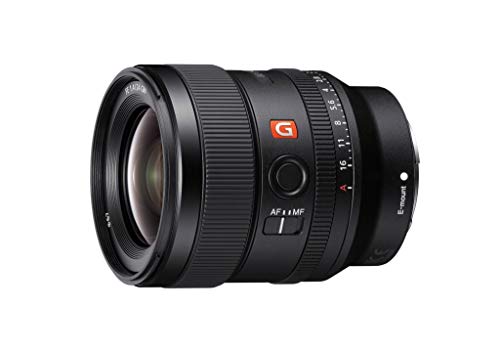
The Sony FE 24mm F1.4 GM is a compact, high-performance wide prime that excels in low-light and storytelling storytelling through its bright F1.4 aperture. As part of the G Master series, it balances razor-sharp definition with creamy bokeh, making it suitable for landscapes, street photography, and environmental portraits. The design emphasizes edge-to-edge sharpness and precise autofocus, ensuring reliable performance in dynamic scenarios. Its optical construction aims to minimize distortion and chromatic aberration, delivering consistent color and contrast across the frame.
Ideal uses include dusk cityscapes, architectural interiors, and videography where a natural perspective helps keep subjects visually connected to their surroundings. For those who want a versatile focal length with premium rendering, this lens is a strong all-around choice that remains compact for travel and handheld shooting.
Sony E 11mm F1.8 APS-C: Ultra-Wide for APS-C Systems

This compact APS-C ultra-wide lens delivers expansive perspectives with a bright F1.8 aperture, making it ideal for dramatic landscape shots, architecture, and vlogging. Its small footprint and lightweight design help maintain balance on smaller bodies or travel kits. The internal focus system keeps the lens length steady during focusing, aiding handling and balance on rigs or gimbals. Two aspherical and three ED elements contribute to sharpness and controlled aberrations, while the wide focal length makes close subjects appear larger, with pleasing background separation at close distances.
Users can push creative boundaries with this lens on Sony APS-C bodies, pairing a broad field of view with fast AF performance for both stills and video. It is particularly appealing for creators who want an affordable, high-quality option that still delivers professional-level results.
Canon RF16mm F2.8 STM: Tiny, Bright, Fixed Wide

The Canon RF16mm F2.8 STM offers an ultra-wide perspective in a compact, fixed focal length lens. With a bright F2.8 maximum aperture, it supports shallow depth of field and strong subject separation in wide scenes, while its stepper-motor-driven STM ensures smooth autofocus for video. As an RF mount option, it integrates cleanly into Canon’s compact mirrorless lineup, making it a practical choice for travel, landscape, and architectural shooting. The combination of lightweight design and good optical performance makes it accessible for enthusiasts and professionals who want a portable wide-angle option.
Consider its limitations in extreme close-ups and the slightly slower performance at the widest settings when paired with older bodies. However, for those seeking a simple, compact wide-angle prime with reliable results, this lens offers solid value and easy handling.
Sony FE 20mm F1.8 G: Bright, Lightweight Ultra-Wide
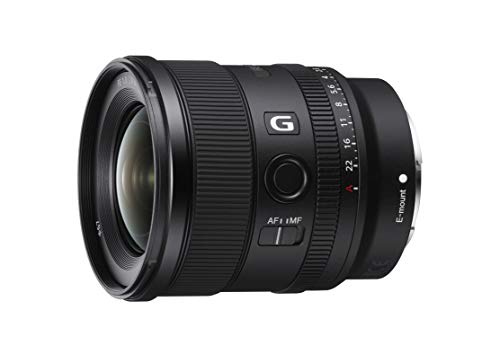
The Sony FE 20mm F1.8 G offers a balanced blend of compact size, bright optics, and premium rendering. Its 20mm focal length provides a natural wide perspective with strong performance for landscapes, astrophotography, and street scenes. The G Master lineage ensures high resolution and pleasing bokeh when needed, while the lens remains notably portable for travel and handheld shooting. Autofocus is engineered for fast, accurate performance, supporting both stills and moving subjects with minimal focus hunting.
For shooters who want a lighter option in a full-frame system without sacrificing image quality, this lens provides a credible combination of sharpness, contrast, and low-light capability. Its design aims to minimize distortion and deliver edge-to-edge clarity across the frame, making it a dependable choice for everyday wide-angle work.
Buying Guide: Key Purchase Considerations For Wide Angle Prime Lenses
- Sensor format and mount compatibility: Match the lens to your camera’s sensor size (full-frame vs. APS-C) and the mount type (Sony E-mount vs. Canon RF, etc.). Full-frame lenses can often cover APS-C bodies but may introduce vignetting or cropping on smaller sensors.
- Aperture and low-light performance: Wider maxima (F1.4–F1.8) provide brighter viewfinders, faster shutter speeds, and shallower depth of field for creative control, especially in astrophotography or night scenes.
- Optical quality and coatings: Look for elements like aspherical and extra-low dispersion glass to reduce aberrations, chromatic fringing, and flare. Nano AR coatings help preserve contrast in challenging light.
- Autofocus performance: For action, travel, or video, consider lenses with internal focusing and fast, quiet AF. XD or linear motor systems typically improve tracking and responsiveness.
- Weight and handling: Ultra-wide primes can be bulky; assess the balance with your camera body, gimbal, or rig. Internal focusing helps maintain length and balance during use.
- Field of view and composition: Consider whether you prefer a 11–14 mm ultra-wide for dramatic scenes or 16–24 mm for more natural surroundings with less distortion near edges.
- Size of the kit: If you shoot travel or street work, a compact lens reduces load and increases mobility. Some lenses pair well with small bodies for a lighter kit overall.
- Video considerations: For filmmakers, look for smooth focus breathing, quiet AF, and consistent exposure characteristics across focal lengths.
In choosing among these options, weigh the primary use case—landscapes and architecture often benefit from the extreme perspective of 11–14 mm, while environmental portraits and street photography might be better served by 20–24 mm primes. For full-frame systems, prioritize image center-to-edge sharpness and chromatic control; for APS-C, evaluate how the focal length translates to your intended field of view on your camera.