Best Waterproof Camera Housings for Safe Underwater Shots
When exploring underwater worlds, choosing a reliable waterproof housing is essential to protect your DSLR or mirrorless camera while preserving full control and image quality. This guide highlights five top options, detailing fit, protection, and usability to help you pick the right case for rain, waves, and all-water adventures.
| Product | Brand | Key Benefit |
|---|---|---|
| Zonman DSLR Universal Waterproof Case | ZONMAN | Broad compatibility and full-access design |
| DiCAPac WP-S10 Pro DSLR Case | DiCAPac | Depth rated up to 16.4 ft with easy operation |
| YOIDESU Universal Waterproof Case | Yoidesu | 20 m depth rating and comprehensive control access |
| Denash Waterproof Housing | Denash | 20 m depth, robust sealing, user-friendly |
| Pomya Universal Dving Case | Pomya | Floating, 20 m depth, easy operation |
These options cover a spectrum of needs—from broad camera compatibility and deep-water use to quick access for action shoots. All offer reliable seals to guard against water, dust, and moisture, with varying levels of ease of use and fit. The following sections dive into each product’s strengths, practical use cases, and how they compare on important factors like depth rating, access to controls, and portability.
Zonman DSLR Universal Waterproof Case
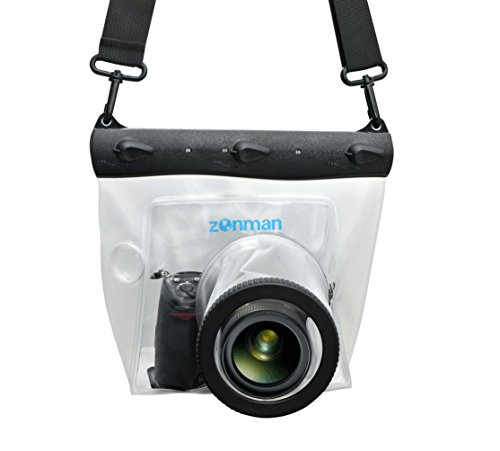
The Zonman housing is designed for a broad range of Canon, Nikon, Sony, and Pentax DSLRs. It accommodates cameras with lenses up to about 13 cm in length and 8 cm in diameter, ensuring a secure fit for many popular bodies. This model emphasizes practical underwater control access through strategically placed finger holes, enabling shutter activation, zoom, and focus adjustments without removing the camera from the case. It provides a balance of protection and usability for snorkeling, shallow dives, or adverse weather shoots. The seal is designed to resist water, moisture, dust, and sand, helping keep your gear safe in mixed environments.
Key considerations for Zonman include compatibility breadth, ease of operation, and the level of protection against particulates. It is well-suited for travelers or hobbyists who rotate between different DSLR bodies and need a single solution. The materials emphasize durability and a reliable seal, though extreme depth or professional dive scenarios may demand higher-end housings with pressure-tested seals. Overall, it represents a practical, budget-minded option for casual underwater photography and weatherproof shooting.
DiCAPac WP-S10 Pro DSLR Case

The DiCAPac WP-S10 Pro is built for underwater photography with a depth rating of up to 5.0 meters (16.4 feet). It uses a roll-and-velcro zipper system and a built-in finger sleeve to maintain camera control while submerged. The design supports quick setup and straightforward operation, making it a strong choice for divers and snorkelers who want reliable protection without sacrificing essential controls. It is compatible with many standard DSLR bodies, offering clear viewing windows and practical access to buttons and dials.
Consider this housing if your sessions include frequent submersions with stable, shallow-water needs. It emphasizes ease of use and a robust water seal, though users should verify lens clearance and tripod compatibility for specific setups. The WP-S10 Pro provides a good balance of protection, usability, and value for hobbyists who want dependable underwater performance without stepping up to premium pro gear.
YOIDESU Universal Waterproof Case

The Yoidesu housing targets versatile DSLR protection with a documented depth rating up to 20 meters. It emphasizes easy access to all camera buttons, allowing full control during underwater shoots while keeping the camera dry and the housing sealed. The construction combines sturdy plastics with reinforced materials to resist dust, sand, and moisture. Lightweight and portable, this case is well-suited for travelers who want a capable solution without heavy rigging. The design supports camera operation directly through the case, including zoom and focus adjustments, which is essential for underwater composition and framing.
For users prioritizing depth and control integrity, Yoidesu offers a reliable option that performs well for recreational diving and water sports. It is a practical pick for those who shoot in wet and humid environments, where weatherproof protection and straightforward handling matter. The universal fit may accommodate several camera models, but verify exact compatibility with your body and lens configuration to ensure seamless operation and seal integrity.
Denash Waterproof Housing

Denash presents a full-sealed, anti-moisture housing rated for up to 20 meters underwater use. Its robust construction focuses on protecting cameras against water, dust, mud, sand, snow, and grease while maintaining usability. The case aims to provide straightforward operation so photographers can access essential functions without removing the camera from the housing. The protective materials emphasize durability in rugged environments, making it suitable for adventure shoots, diving expeditions, and surfing sessions where equipment exposure is a concern.
Denash balances protection with user convenience, offering a sealed design and a user-friendly interface. It targets photographers who need dependable performance in demanding outdoor settings, including saltwater and high-humidity scenarios. Prospective buyers should confirm lens compatibility and the ability to operate critical controls within the case to ensure that it meets their shooting needs across different water activities.
Pomya Universal Dving Case
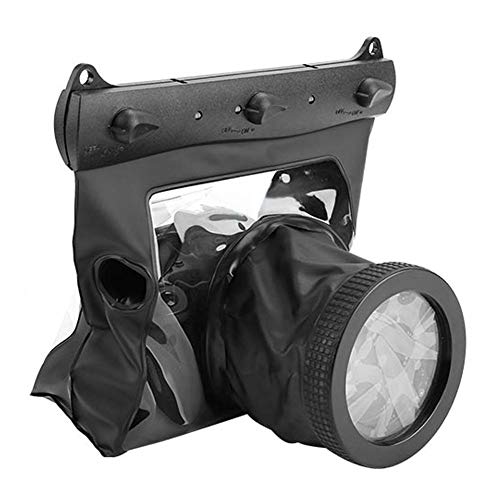
The Pomya Dving Case offers a floating design with a 20-meter depth rating, aiming to prevent losing valuable gear to slips and splashes. It emphasizes protection from dust, mud, sand, snow, grease, and water, making it versatile for beaches, pools, fishing, kayaking, snorkeling, and other water activities. The case is engineered for easy operation so photographers can control their cameras directly inside the housing, a valuable feature for action-oriented shoots where quick adjustments are necessary. The floating capability adds an extra layer of security during harsh or dynamic water environments.
When choosing Pomya, consider how often you shoot in deep or dynamic water, where buoyancy and quick access can be pivotal. The construction focuses on durability and user-friendly handling, but verify your camera model compatibility and ensure the case provides a reliable seal for your intended depth and activity level. This option suits travelers and water sports enthusiasts who need a portable, mid-range underwater housing with straightforward operation.
Buying Guide: Key Purchase Considerations
- Depth rating and water type: Match the housing depth rating to your planned activities. Recreational diving typically requires 10–20 meters, while casual snorkeling may be sufficient with shallower ratings.
- Camera compatibility: Confirm fit for your exact camera model and lens configuration. Some universal cases fit a broad range, but others may require model-specific checks.
- Access to controls: Prioritize housings that allow easy shutter, zoom, and menu control while underwater or in rain. Finger slots, touch-friendly access, and button placement matter for shot consistency.
- Seal integrity and materials: Look for reliable seals, anti-dust and anti-sand coatings, and robust materials like polycarbonate or reinforced plastics to withstand harsh environments.
- Portability and weight: Consider the travel profile. Lighter housings with integrated buoyancy features reduce fatigue during long shoots.
- Maintenance: Ensure the housing is easy to rinse and dry after use to prevent mold and material degradation in salty or humid conditions.
- Accessory compatibility: Some housings support vacuum testing, depth-specific mounts, or additional ports for domes or lenses. Check for these features if you need them.
- Price vs. protection balance: Higher-end options often offer greater durability and control precision but weigh against budget and travel needs. Choose based on how frequently you dive or shoot in challenging environments.
In summary, the best choice depends on your diving depth, camera model, and how much control you must retain below the surface. For casual and travel-friendly use, Zonman, DiCAPac, and Pomya provide solid value with practical features. For deeper or more professional scenarios, Yoidesu and Denash offer robust protection and control access, ensuring your equipment stays safe while you focus on capturing the moment.