Best Telescope Lens for DSLR: A Practical Guide to Enhancing Astrophotography and Solar Viewing
For amateur astronomers and photographers, pairing a DSLR with the right telescope optics can dramatically improve both daytime and nighttime viewing. This article highlights five carefully chosen products that help you expand your reach—from solar safety to high-midelity eyepiece viewing and protective accessories. Each item is evaluated for build quality, compatibility, and real-world usefulness for DSLR users seeking clearer images and safer solar observation.
Summary Table of Selected Products (Amazon links below):
| Product | Brand | Primary Use | Key Benefit |
|---|---|---|---|
| Celestron EclipSmart Safe Solar Eclipse Filter | Celestron | Solar viewing with DSLR compatibility | ISO 12312-2:2015(E) safety standard, secure fit |
| SVBONY 2X Barlow Lens | SVBONY | Magnification boost for DSLR-connected eyepieces | 2x amplification, low chromatic aberration |
| COSULAN 400mm Telephoto Phone Lens | COSULAN | Phone-based long focal length for wildlife and travel | 40x-like reach with 400mm fixed focal length |
| SVBONY 4mm Eyepiece | SVBONY | High-magnification planetary viewing | Fully coated optics, high contrast |
| Starboosa 1.25″ Barlow Lens & Moon Filter Kit | starboosa | Magnification plus lunar filtering | 2.5x magnification; practical for lunar details |
Celestron EclipSmart Safe Solar Eclipse Filter

The Celestron EclipSmart filter is designed for safe solar observation and photography when used with telescopes, spotting scopes, or DSLR cameras. It adheres to ISO 12312-2:2015(E) standards, ensuring safe direct solar viewing. The filter fits tubes with outside diameters of 75mm to 100mm and includes adjustable side panels for a secure fit. After use, simply fold flat and store in the reusable bag provided. This makes it a practical choice for DSLR users seeking solar imaging without specialized equipment beyond the filter itself.
Compatibility and safety are central benefits: the filter’s design supports quick adaptation to existing optics, reducing setup time before a solar session. For DSLR photography, the filter minimizes risk while enabling reliable solar captures. The product ships with a simple fit system that does not require complex mounting, which is ideal for beginners and seasoned enthusiasts alike.
SVBONY 2X Barlow Lens

The SVBONY 2X Barlow Lens doubles the magnification of any 1.25-inch eyepiece, expanding the practical reach of your DSLR-tethered telescope without purchasing multiple expensive eyepieces. It uses a two-element, one-group broadband green film multi-coated optical glass design, and a blackened housing to maximize image contrast while minimizing chromatic aberration. This makes it a strong value proposition for users who want sharper planetary and lunar details without complicating the optical train.
Performance notes indicate improved view clarity and extended focal length when paired with standard 1.25″ focuser systems. The lens is compatible with most traditional amateur telescope setups, offering a straightforward upgrade for those seeking more close-up opportunities with their DSLR captures.
COSULAN 400mm Telephoto Phone Lens
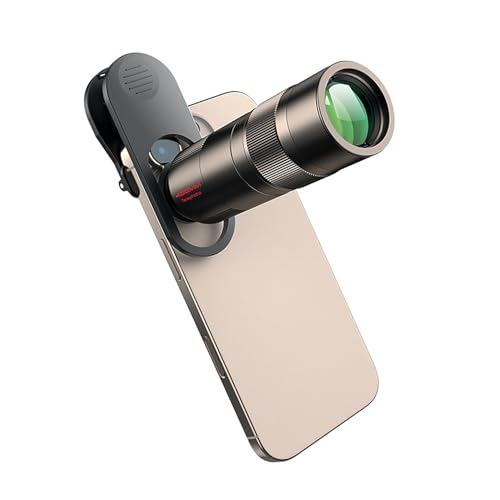
The COSULAN 400mm Telephoto Lens is a fixed 400mm telephoto option designed for smartphones. While primarily marketed for wildlife and travel photography, the extended focal length complements DSLR workflows by offering a portable long-range alternative that can be used in field observations alongside traditional telescope setups. The lens features a multi-coating (FMC) with seven-layer optical coatings to improve light transmission and color fidelity. An included universal clip ensures compatibility with many mobile devices, and a carrying case adds portability for field sessions.
For DSLR users, this lens provides a portable option when you want to shoot distant subjects beyond the telescope’s reach, or when experimenting with hybrid setups that include both a telescope and a smartphone camera. Color accuracy and edge-to-edge sharpness benefit from the seven-layer coating, reducing ghosting and flare in bright conditions.
SVBONY Eyepieces 4mm 1.25″

The SVBONY 4mm eyepiece is a high-magnification option designed for 1.25-inch telescopes. It provides a close look at the Moon and planetary surfaces with a standard 1.25″ focuser. The eyepiece features fully coated optics for improved light transmission and contrast, helping deliver crisp detail across the field of view. It is described as highly achromatic with planetary filters to enhance features on Jupiter, Saturn, Mars, and Venus, offering a practical upgrade for DSLR users seeking improved planetary imaging and observation.
Performance considerations include compatibility with common 1.25″ focusers and the importance of matching focal length to your telescope’s aperture and sensor size. This eyepiece’s design emphasizes image clarity and contrast, contributing to more detailed planetary imaging when paired with a DSLR body.
Starboosa 1.25″ Barlow Lens & Moon Filter Kit

The Starboosa kit combines a 1.25-inch Barlow lens with a moon filter to improve lunar observations. The 5x Barlow configuration is designed to provide substantial magnification, effectively boosting eyepiece reach to around 2.5x in practice. The kit targets a broad compatibility range, working with Celestron, Skywatcher, Meade, Orion, and other major brands. The moon filter reduces brightness and glare, allowing more comfortable viewing of lunar features during high-contrast phases.
For DSLR users, this kit offers a practical way to explore deeper lunar details without investing in additional high-end optics. It also expands the versatility of existing eyepieces, supporting both planetary studies and general deep-sky observation when combined with appropriate filters and camera settings.
Buying Guide: Key Purchase Considerations For Telescope Lenses And Accessories
- Safety And Compatibility: When observing the Sun, always prioritize solar-safe filters that meet recognized standards (e.g., ISO 12312-2). Check your telescope’s tube diameter and the equipment’s mounting compatibility to avoid accidental misfit or damage to the optical tube.
- Magnification Versus Image Quality: Higher magnification through a Barlow lens or eyepiece can reveal more detail, but it also magnifies atmospheric turbulence and reduces brightness. Pair high-magnification accessories with stable mounts, shorter exposures, and appropriate camera settings.
- Coatings And Glass Quality: Multi-coated optics reduce glare and improve contrast. Look for fully coated or multi-coated elements to maximize light transmission, especially in low-light night sky imaging.
- Flexibility And Versatility: Choose accessories that adapt to multiple setups—DSLRs, mirrorless cameras, and smartphone adapters. A modular approach helps you switch between astrophotography and solar viewing without purchasing entirely new systems.
- Protective Accessories: Lens caps and protective covers prevent dust, moisture, and scratches on lenses and eyepieces, preserving the image quality over time and reducing post-processing issues.
- Field Use And Portability: Portable telephoto lenses for phones are useful for field trips where carrying full telescope gear is impractical. Evaluate weight, clip compatibility, and case options for on-the-go sessions.
- Budget Versus Performance: Barlow lenses and eyepieces vary in price but can dramatically affect image quality. For DSLR users, prioritize lenses with low chromatic aberration, good edge sharpness, and robust build.
In summary, a balanced kit for telescope-based DSLR imaging often includes a solar filter for safe daytime use, a high-quality Barlow or premium eyepiece for magnification, protective lens accessories, and versatile multipurpose tools for fieldwork. The chosen items here provide a blend of safety, clarity, and extended reach—helping you capture more accurate, compelling astronomical images.