Best Telephoto Lenses for Astrophotography to Capture Cosmic Wonders
Astrophotography requires precision optics and powerful zoom to capture the stars, planets, and celestial phenomena in stunning detail. Below is a comparison table highlighting five top telephoto lenses suited for astrophotography on various cameras and smartphones, combining focal length, compatibility, and image quality benefits.
| Lens Name | Focal Length | Compatibility | Key Feature |
|---|---|---|---|
| Big Mike’s 500mm/1000mm f/8 Manual Telephoto Lens | 500mm with 2X Teleconverter to 1000mm | Canon EOS DSLR EF-Mount | Exceptional magnification with multi-coated optics |
| Rokinon 135mm F2.0 Telephoto Lens | 135mm | Canon Full Frame and APS-C | Fast f/2.0 aperture for low light |
| Evil Eye 20-60X Zoom Telephoto Phone Lens | 20X-60X Zoom | Smartphones (iPhone, Samsung, Android) | HD glass with CNC aluminum alloy body |
| MIAO LAB 30X Telephoto Phone Lens | 30X Zoom | Most smartphones 70-100 mm wide | Adjustable focus ring and aluminum tripod included |
| JINTU EF Mount 420-800mm Manual Zoom Lens | 420-800mm zoom | Canon EOS EF/EF-S Mount DSLR | Manual focus with metal body and low-dispersion glass |
Big Mike’s 500mm/1000mm f/8 Manual Telephoto Lens for Canon EOS DSLR

This 500mm f/8 telephoto lens offers remarkable image quality due to its high index, low dispersion multi-coated optical glass. It comes with a built-in 2X teleconverter, doubling focal length to 1000mm, ideal for capturing distant celestial bodies. Specifically designed for Canon EOS cameras with EF-mount compatibility, it integrates seamlessly for sharp and detailed astrophotography shots. Its manual focus mechanism allows precise adjustment for focusing on stars, planets, or the moon, making it a versatile choice for photographers with DSLR cameras ranging from Canon Rebel series to professional full-frame models.
Rokinon 135mm F2.0 Telephoto Lens for Canon
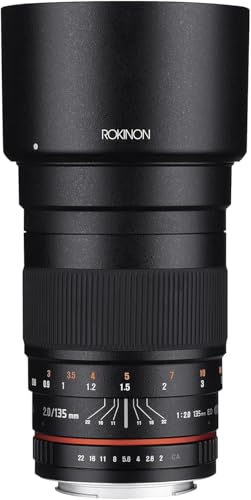
The Rokinon 135mm F2.0 lens is well-suited for astrophotography with its fast f/2.0 aperture, enabling better performance in low-light starry skies. Compatible with both full-frame and APS-C Canon cameras, it provides a versatile 18.8-degree angle of view (full-frame) and 12.4 degrees (crop sensor). The ultra multi-coated (UMC) optics reduce glare and unwanted reflections, essential for sharp night sky imaging. Its close minimum focusing distance of 2.6 feet allows flexibility for foreground elements in night landscapes, making this lens a strong choice for deep sky and wide-field astrophotography on Canon DSLRs.
Evil Eye 20-60X Zoom Telephoto Lens Phone Attachment

This high-power HD telephoto lens transforms your smartphone into a powerful tool for astrophotography with its adjustable 20X to 60X magnification. Featuring crystal-clear optical glass with multi-layer coatings, it reduces ghosting and maintains sharpness edge-to-edge. Its 13-lens, 10-group design supports over 99.5% light transmission, critical for capturing faint stars and the moon’s surface. The lens is built from durable CNC aluminum alloy, weighing just 741 grams, and pairs with a tripod and universal phone clip for stable nighttime shots on iPhone, Samsung, and most Android smartphones.
MIAO LAB 30X Telephoto Lens with Tripod for Smartphones

The MIAO LAB 30X telephoto lens offers a powerful zoom option for smartphone astrophotography, with an easily adjustable focus ring for clear distant images. Made from aluminum alloy, this lens features high-quality glass for 4K HD clarity, capturing fine celestial details with sharpness and color accuracy. It includes a sturdy aluminum tripod and wide compatibility with smartphones between 70-100 mm width. The included silicone eyecup doubles as a monocular, enhancing viewing comfort. This setup is designed to minimize image blurring with its tripod support, vital for night sky exposures on smartphones.
JINTU 420-800mm Manual Zoom Telephoto Lens for Canon EF Mount

The JINTU 420-800mm telephoto zoom lens provides an extensive zoom range suitable for capturing distant stars and lunar details. Its manual focus control combined with low-dispersion, multi-coated glass elements optimizes clarity and reduces chromatic aberration. Compatible with Canon EOS cameras featuring EF or EF-S mounts, the lens sports a full metal body ensuring durability during outdoor night sky shoots. The aperture ranges from f/8.3 to f/16 (non-adjustable), suitable for steady astrophotography with tripod use.
Buying Guide: Choosing a Telephoto Lens for Astrophotography
When selecting the best telephoto lens for astrophotography, consider the following key factors to optimize your night sky imaging experience:
Focal Length and Magnification
Long focal lengths (above 300mm) allow you to zoom in on planets, the moon, and star clusters, capturing detailed images. Lenses with a zoom range or teleconverter options are versatile, permitting wide to narrow field compositions.
Aperture and Light Gathering Ability
A wide maximum aperture (lower f-number, like f/2.0) allows more light into the sensor, crucial in low-light night environments. While some telephoto lenses have fixed apertures around f/8 or smaller, choosing faster lenses helps reduce exposure times and noise.
Lens Mount Compatibility
Ensure the lens is compatible with your camera’s mount system (such as Canon EF, EF-S, or smartphone clip styles) for optimal integration and functionality.
Optical Quality and Coatings
Low-dispersion glass and multi-coated optics reduce chromatic aberrations, glare, and ghosting. These features enhance sharpness and contrast in astrophotography, where detail is paramount.
Manual vs Autofocus
Many astrophotography lenses rely on manual focus for fine-tuning sharpness on distant stars. Autofocus is often less reliable at night due to low contrast. Choose lenses with smooth manual focus rings for precision adjustments.
Portability and Additional Accessories
Lenses with included tripods, phone clips, or robust build materials (like aluminum alloy) improve stability during long exposures and reduce vibrations, critical for clear night images. Portability is essential if you travel for astrophotography sessions.
Smartphone Compatibility
For casual astrophotographers, telephoto lens attachments with high zoom and proper optical design for phones can enhance night sky photography without needing DSLR gear.
Balancing these considerations according to your camera system, budget, and photography goals will ensure you select the best telephoto lens to capture breathtaking astrophotography images.