Best Reversal Rings for Macro Photography: Affordable Macro Lens Reversals
Reversal rings offer a simple, inexpensive path into macro photography by reversing a standard lens onto the camera body. This technique dramatically increases magnification without specialized macro glass. Below, five relevant reversal rings and accessories are highlighted, focusing on common filter-thread sizes and versatile compatibility across brands.
Summary of chosen products:
| Product | Brand | Key Benefit | Filter Thread |
|---|---|---|---|
| Fotodiox Macro Reverse Ring (55mm) | Fotodiox | All-metal, smooth mount | 55mm |
| Fotodiox 52mm–52mm Macro Close-up Reverse Ring | Fotodiox | Premium metal build, precise threading | 52mm |
| 49mm Macro Lens Reverse Ring (Canon EF-S) | AMOPOFO | Simple reverse-mount workflow | 49mm |
| 58mm to NEX Macro Reverse Ring | AMOPOFO | Cross-brand versatility to Sony E-mount | 58mm |
| 58mm Macro Ring Reverse for Canon/Nikon/Sony | Fotodiox | Interchangeable kit-style compatibility | 58mm |
Fotodiox Macro Reverse Ring 55mm for Canon RF-Mount
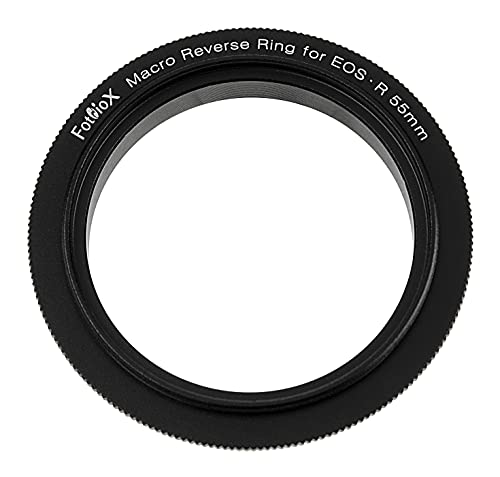
Overview: This all-metal reverse ring fits any lens with a 55mm filter thread and is designed for reverse mounting onto Canon RF-mount cameras. The ring features a precise 0.75 pitch thread and a lightweight, smooth surface for effortless mounting. No optical inserts are used, so the lens’ native image quality is preserved while achieving macro magnification.
Key considerations: The 55mm size is common on many budget primes and kit lenses, making this a practical entry point. Its solid construction minimizes wobble during use and supports quick changes between lenses. It is particularly well-suited for close-up subjects with high texture, such as flowers or mechanical parts, where detail matters most.
Fotodiox 52mm–52mm Macro Close-up Reverse Ring

Overview: A durable all-metal design with precise threading and a 0.75 pitch, this reverse ring suits lenses with 52mm filter threads. It supports reverse mounting for macro work across multiple camera brands when used with compatible lenses. The compact design keeps overall weight low, aiding stability during macro sessions.
Key considerations: The 52mm thread size is common on many entry-to-mid-level lenses, providing a versatile option for hobbyists. Because there is no optical element, the image quality remains dependent on the lens’ own optics, emphasizing sharpness at high magnification without optical compromises.
AMOPOFO 49mm Macro Lens Reverse Ring (Canon EF-S)
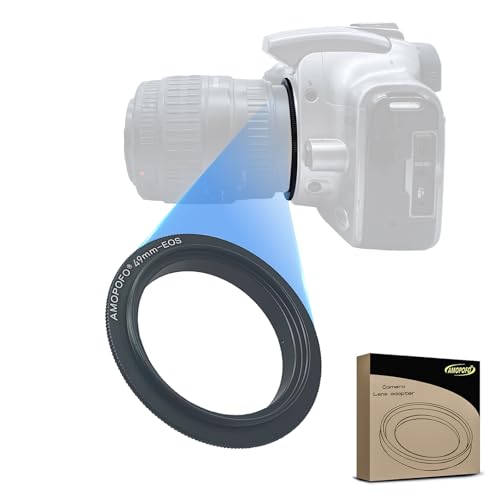
Overview: This 49mm reverse ring is designed to reverse a lens with a 49mm filter thread onto Canon EF-S bodies. The assembly process is straightforward: detach the lens, mount the reverse ring to the camera, and reattach the lens in reverse, to achieve macro magnification. It’s a cost-efficient option for buyers who already own compatible lenses.
Key considerations: The device is compatible with a broad range of Canon bodies listed in its description. It’s best used with relatively affordable primes and kit lenses where filter-thread sizing aligns. As with other reversal rings, performance hinges on the lens’ optical design and mechanical quality at magnification levels.
AMOPOFO 58mm to NEX Macro Reverse Ring

Overview: This reverse ring adapts a 58mm filter-thread lens to Sony E-mount cameras, broadening cross-brand macro opportunities. The mount is built from aluminum alloy for durability and corrosion resistance, with a matte inner finish to minimize reflections. It enables secure attachment of the reversed lens for macro shooting across Sony bodies.
Key considerations: The 58mm size is common among mid-range zooms and primes, making this a flexible option for Sony shooters exploring macro capabilities. The ring’s design emphasizes a secure fit while remaining detachably simple to remove when not in use. Users should anticipate vignetting with certain full-frame bodies at extreme magnification, depending on lens choice.
Fotodiox 49mm–52mm Macro Close-up Reverse Ring

Overview: This ring covers a 49–52mm range in one unit, offering compatible reverse mounting for a subset of lenses across Nikon, Canon, Sony, Olympus, Pentax, Panasonic, and Samsung cameras. The all-metal design, precise threading, and 0.75 pitch size ensure stable, repeatable mounting for reliable macro sessions.
Key considerations: The dual-thread option provides flexibility for users with multiple lenses and camera brands. When selecting this option, verify both your lens’ filter size and the camera body’s compatibility to ensure full reverse-mount operation and expected magnification.
Fotodiox 52mm–58mm Macro Close-up Reverse Ring

Overview: This 52-58mm reverse ring fits lenses with 52mm to 58mm filter threads, giving users more flexibility to pair multiple lenses with a single camera. The all-metal construction, precise 0.75 pitch threads, and robust finish provide dependable performance for macro work across several brands and lenses.
Key considerations: Ensure your target lens falls within the 52–58mm range. This option is especially useful for shooters who own zooms or primes in that filter diameter bracket. It supports easy swap between lenses while maintaining consistent macro results.
JJC Macro Ring Light (Optional Addition)

Overview: While not a reverse ring itself, a macro ring light complements reversal rings by delivering even, diffused lighting and reducing harsh shadows at high magnifications. The unit is compatible with a range of adapter rings (49/52/55/58/62/67mm) and supports multiple camera systems for macro work and close-up shooting.
Key considerations: Lighting is a critical factor in macro photography. A ring light helps achieve consistent exposure and pleasing catchlights, particularly for flower, insect, or textured subjects. It may add cost but offers tangible quality improvements in many macro setups.
Buying Guide: Reversal Rings And Macro Setup Considerations
Purpose and compatibility: Reversal rings enable macro magnification by mounting a lens in reverse onto the camera. Compatibility is determined by the lens’ filter thread size and the camera’s mount system. Most common sizes include 49mm, 52mm, 55mm, 58mm, and 58–56mm ranges. Match the thread size to your lens to ensure a secure, stable mount.
Material and build: All-metal rings deliver durability and a tighter, more precise fit. Look for rings with smooth finishes to prevent cross-threading and to minimize wear on both the lens and camera mount. A 0.75 pitch is a common standard that ensures reliable threading and repeatable mounting cycles.
Optical considerations: Reversal rings do not include optical elements, so magnification relies on the lens’ focal length and the camera’s sensor size. Shorter focal lengths provide higher magnification when reversed but can introduce more pronounced field curvature and edge softness. Consider the trade-off between magnification and image sharpness based on your subject.
Cross-brand flexibility: Some reversal rings are designed to be cross-brand, enabling use with different camera mounts when paired with appropriate lenses. If you own lenses from multiple brands or anticipate upgrading cameras, a versatile set of rings can reduce future costs.
Lighting and shadows: Macro work often benefits from additional lighting. A macro ring light or external LED solution can improve exposure, reduce shadows, and deliver more even illumination, which is especially valuable for textured subjects such as plant details or small mechanical components.
Practical workflow: Expect to shoot with manual focus and live view to achieve precise focus on tiny details. Reversal rings require careful handling to avoid accidentally detaching the lens or misaligning the mount. Have spare batteries and storage for quick changes between setups to maximize shooting time.