Best Micro Four Thirds Fisheye Lenses for Creative Wide-Angle Shots
Explore top micro four thirds fisheye lenses that unlock dramatic perspective, ultra-wide fields of view, and distinctive circular or full-frame fisheye effects. The selections below focus on MFT (Micro Four Thirds) mount lenses that deliver sharp optics, broad angles, and practical handling for Olympus and Panasonic cameras. Each option has its own strengths, from ultra-wide circular fisheye to classic full-frame style fisheye coverage.
| Product | Brand | Type | Focal Length | Mount |
|---|---|---|---|---|
| MEKE MK-3.5mm F2.8 | Meike | Ultra Wide Circular Fisheye | 3.5mm | Micro Four Thirds |
| Rokinon FE75MFT-B | Rokinon | Fisheye | 7.5mm | Micro Four Thirds |
| 7artisans 4mm F2.8 | 7artisans | Circular Fisheye | 4mm | Micro Four Thirds |
| Olympus M.Zuiko ED 8mm F1.8 Fisheye PRO | OM SYSTEM | Fisheye Pro | 8mm | Micro Four Thirds |
| Venidice MK-3.5mm F2.8 | Venidice | Ultra Wide Fisheye | 3.5mm | Micro Four Thirds |
Note: This guide focuses on lenses that are compatible with Micro Four Thirds cameras, including Olympus and Panasonic bodies. Each entry includes notable features and typical use cases to help you compare options for landscape, architectural, and creative portrait scenarios.
Meike MK-3.5mm F2.8 Ultra Wide Circular Fisheye

Meike’s fisheye for Micro Four Thirds delivers a 220-degree diagonal field of view, creating striking circular image opportunities on MFT bodies. The lens offers a fast F/2.8 to F/16 aperture range, enabling creative control in varied lighting. Its compatibility covers popular Olympus and Panasonic MFT mirrorless cameras, including models such as EM1, M5, EP5, EPL series, and GH/GF lines. The design emphasizes a compact, approachable option for capturing expansive scenes with pronounced curvature and a dramatic perspective.
Rokinon FE75MFT-B 7.5mm F3.5 Fisheye

This Rokinon fisheye offers a 180-degree angle of view with a compact, lightweight build. The 9-element, 7-group optical arrangement supports an aperture range from F3.5 to F22, enabling dramatic scenes with pronounced distortion for close-to-subject compositions or expansive landscapes. It’s designed for Micro Four Thirds mounts, making it a practical option for Olympus and Panasonic camera users seeking a traditional fisheye look with sturdy imaging performance.
7artisans 4mm F2.8 Circular Fisheye

The 4mm F2.8 lens delivers a 225-degree circular fisheye image on Micro Four Thirds cameras, producing intense perspective effects and a near-360 panorama when used close to subjects. Its compact, all-metal construction provides durability and portability, with a stated minimum focus distance of 0.085m and a maximum magnification of 0.11, enabling creative close-up applications as well as sweeping environmental shots. The wide aperture supports brighter internal framing for night or star photography while maintaining a pronounced curvature in the scene.
Olympus M.Zuiko Digital ED 8mm F1.8 Fisheye PRO
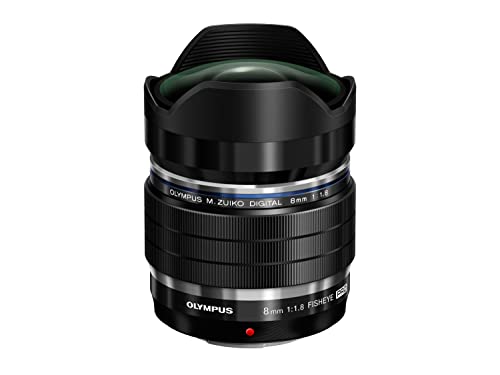
The M.Zuiko Digital ED 8mm F1.8 Fisheye PRO is a renowned option within Micro Four Thirds, designed for extreme wide-angle work with professional weather sealing and fast performance. Its fast f/1.8 maximum aperture supports low-light shooting and shallow depth of field in constrained spaces, while delivering characteristic fisheye distortion and a wide field of view suitable for architecture, interiors, landscapes, and immersive creative portraits. The lens emphasizes optical quality and weather resistance for demanding outdoor use.
Venidice MK-3.5mm F2.8 Ultra Wide Fisheye

Venidice offers a 3.5mm ultra-wide fisheye option for MFT cameras, with a design tailored to Olympus and Panasonic Micro Four Thirds bodies. The lens focuses on providing broad field coverage and dramatic distortion suitable for landscape panoramas, architectural shots, and experimental visuals. The accompanying cleaning cloth is a practical inclusion for on-location workflows, helping maintain optics in varying shooting environments.
Buying Guide: Key Considerations For Micro Four Thirds Fisheye Lenses
- Fisheye Type: Decide between circular fisheye (produces a circular image with black borders on the frame) and full-frame fisheye (produces a complete circular or heavily distorted rectangle). Your subject matter and workflow determine the best choice for your camera.
- Angle of View: Typical options range from 180° to 220° diagonal. A larger angle provides more radical distortion and surrounding context, which is ideal for creative landscapes and interior geometry.
- Aperture and Light Handling: Fast apertures (e.g., F/2.8 or faster) enable shooting in dim light and create more pronounced subject isolation when needed. Consider stopping down for improved sharpness across the frame.
- Optical Quality: Look for coatings and element designs that minimize distortion, coma, and vignetting at the edges. Higher-end options from major brands often deliver more consistent performance.
- Build and Handling: Since fisheyes can be rear-heavy or bulky, verify how the lens balances on your camera body. Metal construction and weather sealing add durability for outdoor shooting.
- Autofocus vs. Manual Focus: Most fisheye lenses for MFT are manual focus or have limited autofocus behavior. Consider your comfort level with manual focusing for critical shots, especially in astrophotography or low-light scenes.
- Compatibility: Ensure the lens is explicitly stated for Micro Four Thirds mount and supports the camera bodies you own (e.g., Olympus, Panasonic, or third-party MFT cameras).
- Size and Weight: Lenses like 4mm or 3.5mm designs tend to be compact and lightweight, which is beneficial for travel and street shooting where a discreet setup helps.
- Price-to-Performance: Third-party options often provide excellent value, but test images if possible to confirm the optical quality and distortion characteristics align with your creative goals.
When choosing among these lenses, consider your primary use: architectural archways and interiors benefit from extreme perspective, landscapes benefit from wide coverage and edge-to-edge sharpness, and creative portraits can leverage dramatic distortion for context-rich frames. Each lens listed offers a distinct balance of field of view, brightness, and handling that can enhance your Micro Four Thirds shooter’s creative toolbox.