Best Light Meters for Film Cameras: Accurate Exposure Tools for Photography
Choosing the best light meter for film cameras is essential for photographers seeking precise exposure and better control over their shots. From compact digital meters to vintage-style analog devices, this guide highlights top options ideal for film photography. Below is a summary table showcasing five selected light meters to compare features and functionality at a glance.
| Product Name | Brand | Key Features |
|---|---|---|
| LightMate Lite 2R Light Meter | LightNova | Large OLED Screen, USB-C Rechargeable, 30° Metering Lens, Exposure & ND Filter Compensation |
| Sekonic 401-208 Twin Mate Light Meter | Sekonic | Instant aperture/shutter readout, Shoe Mounting, One-Hand Operation |
| CHI L.D. Light Meter Lite | CHI | Integrated Laser Rangefinder, 30° Angle Metering, Exposure & Distance Calculation |
| TTARTISAN Light Meter II Two Dial | TTARTISAN | Clickable Dials, Expanded Shutter Speeds, Retro Design, Replaceable Battery |
| Sekonic LiteMaster Pro L-478D-U | Sekonic | Large Color LCD, Simultaneous Ambient & Flash Metering, Cine Motion Modes |
LightMate Lite 2R High Precision Digital Light Meter

The LightMate Lite 2R is designed for film photographers who require detailed exposure readings with high accuracy. Featuring a 0.96 inch large OLED screen with adjustable brightness, it ensures excellent visibility in various lighting conditions. The device offers modes such as aperture priority and shutter priority, allowing customized metering. Its 30-degree metering lens supports most shooting scenarios effectively. Additional functions include exposure compensation, ND filter adjustments, and depth of field calculation. This compact meter is powered by a rechargeable USB-C battery lasting over 20 hours of continuous use, making it reliable for extended shooting sessions.
Sekonic 401-208 Twin Mate Light Meter
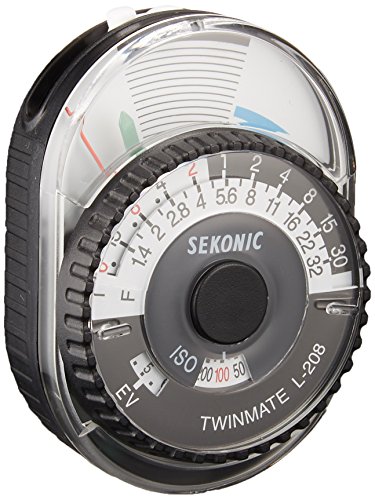
The Sekonic 401-208 Twin Mate offers an easy-to-read dial ring displaying aperture and shutter combinations instantly. Its shoe mounting capability allows attachment directly onto cameras for convenient on-the-go adjustments. The meter supports one-hand operation which suits fast-paced shooting environments. Though basic in features compared to digital meters, it is an effective analog tool for photographers who prefer traditional exposure readings. Its classic design enhances manual control when working with film cameras and ensures consistent exposure accuracy.
CHI L.D. Light Meter Lite with Laser Distance Measure

The CHI L.D. Light Meter Lite stands out by combining light metering and laser distance measurement in one compact device. It provides 30° wide angle metering suitable for evaluating scene exposure uniformly. With the built-in laser rangefinder, photographers can measure accurate focusing distances from 0.1 to 50 meters with continuous laser mode, even in low light conditions. This multifunctional approach supports precise exposure calculations and focus accuracy, ideal for demanding film photography applications needing precise measurements.
TTARTISAN Light Meter II Two Dial Analog Design

The TTARTISAN Light Meter II is a simple yet efficient analog light meter featuring enhanced clickable dials for precise ISO, shutter speed, and aperture adjustments. It offers 23 shutter speed gears and expanded iris settings for more nuanced exposure control. Its lightweight and retro appearance complements vintage cameras perfectly. Unlike sealed meters, it uses a replaceable battery, allowing for longer lifespan and sustainable use. This meter targets photographers looking for an easy-to-use, stylish, and reliable exposure tool without complex electronics.
Sekonic LiteMaster Pro L-478D-U Digital Light Meter

The Sekonic LiteMaster Pro L-478D-U is a versatile, professional-grade light meter with a large color LCD display that simultaneously shows ambient and flash light data. Particularly useful in flash photography, it features unique functions for simultaneous ambient and flash metering and indicates the percentage of flash contribution to total exposure. It supports cine mode settings for shutter speeds and frame rates, making it valuable for both stills and motion picture filming. Intuitive touchscreen controls allow quick, precise adjustments for complex lighting setups.
Buying Guide: Key Considerations for Choosing a Light Meter for Film Cameras
When selecting a light meter for your film camera, it’s important to evaluate several factors that affect usability, accuracy, and compatibility with your shooting style:
- Type of Metering: Decide between incident light meters (measuring light falling on the subject) and reflected light meters (measuring light bouncing off subjects). Incident meters are often preferred for consistent exposure.
- Metering Angle: A wider angle (20°–30°) averages light from a larger scene area, while spot meters with smaller angles (1°–5°) focus on specific points for precision.
- Display and Readability: Digital meters with large, bright OLED or LCD screens enhance ease of use, especially in dim environments.
- Power Source: Rechargeable batteries with USB-C charging provide convenience over replaceable batteries, but replaceable batteries extend product life without charging dependence.
- Additional Features: Consider meters offering depth of field calculations, ND filter compensation, or built-in rangefinders to improve workflow.
- Portability and Design: Compact and lightweight meters are easier to carry and more practical for outdoor and travel shooting.
- Compatibility: Ensure the meter has shoe mount options or handheld usability that fit your camera setup and shooting preference.
Comparing these aspects across multiple models helps select the best meter that aligns with your film photography needs, whether you favor vintage manual controls or modern multifunctional digital devices.