Best Mirrorless Camera Lenses for Sharp Images and Creative Flexibility
Choosing the right lens can dramatically expand a mirrorless camera’s capabilities, from everyday travel shots to portraits and cinematic video. The following picks cover a range of focal lengths, apertures, and mounts to help you compare top-performing options for popular mirrorless systems. The list includes prime and zoom lenses with solid optical stabilization and fast focusing. Use the quick reference table below to compare key details at a glance.
| Product | Camera System | Typical Focal Length | Key Benefit |
|---|---|---|---|
| Canon RF50mm F1.8 STM | Canon EOS R Series | 50mm | Bright f/1.8 for low light and background blur |
| Sony SELP1650 16-50mm OSS | Sony E (APS-C) | 16-50mm | Compact kit zoom with Power Zoom and stabilization |
| Canon RF-S55-210mm F5-7.1 IS STM | Canon RF-S APS-C | 55-210mm | Flexible telephotos in a compact form |
| Panasonic LUMIX G VARIO 45-150mm | Micro Four Thirds | 45-150mm | Balanced zoom with optical stabilization |
| Tamron 17-70mm f/2.8 Di III-A | Sony E APS-C | 17-70mm | High-speed standard zoom with versatile range |
The following sections highlight five lenses that stand out for mirrorless shooters. Each product includes a concise overview of features, performance notes, and how it fits different shooting styles—from street photography and travel to portraits and video work.
Canon RF50mm F1.8 STM Lens Overview

The Canon RF50mm F1.8 STM is a compact, lightweight fixed focal-length prime designed for EOS R-series mirrorless cameras. Its large maximum aperture of f/1.8 delivers excellent low-light performance and a pronounced background blur for portraits and creative bokeh. The stepping motor (STM) provides smooth and quiet continuous autofocus during both video recording and photography, aiding reliable focus tracking in dynamic scenes. This lens is a popular choice for everyday carry and street shooting due to its balance of image quality, size, and price.
Sony E 16-50mm OSS Kit Lens
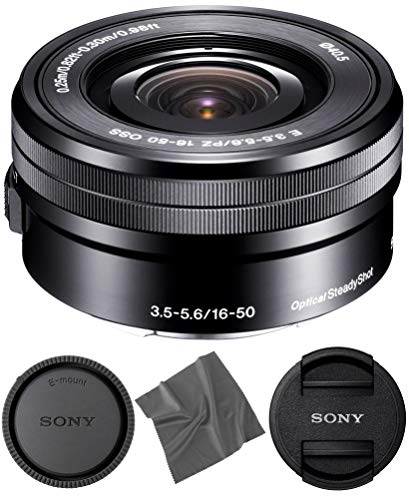
This compact zoom covers a versatile 16-50mm range for Sony E-mount APS-C cameras. It includes Optical SteadyShot (OSS) image stabilization and a Power Zoom mechanism, making it a practical kit lens for travel, vlogging, and everyday photography. Its optical design features one ED element, four aspherical elements, and a broad aperture range that supports varied lighting conditions. While not a prime, its collapsible form helps keep gear light and portable without sacrificing broad framing options.
Canon RF-S55-210mm Telephoto Zoom

The Canon RF-S55-210mm F5-7.1 IS STM is an APS-C telephoto zoom designed to complement RF-S cameras. It delivers approximately 88–336mm full-frame equivalent coverage when used on APS-C sensors, expanding reach for landscapes, portraits, travel, and wildlife shots. The STM focus motor and optical image stabilization help steady handheld shooting, while the lens size remains compact for transport and on-the-go shooting. It’s a balanced option for shooters building a versatile telephoto set.
Panasonic LUMIX G VARIO 45-150mm

The Panasonic LUMIX G VARIO 45-150mm is a Micro Four Thirds zoom designed for video and stills. It features a multi-coated optical path to reduce ghosting and flare, a near-silent inner focus mechanism, and a stepping motor for smooth, quiet focusing suitable for video work. Combined with Panasonic’s Mega OIS, it helps deliver sharper handheld shots in low light and when recording handheld footage. The lens provides a practical mid-telephoto range in a compact package for Micro Four Thirds systems.
Tamron 17-70mm f/2.8 Di III-A VC RXD

The Tamron 17-70mm f/2.8 Di III-A VC RXD is a high-speed standard zoom for Sony E APS-C cameras. It offers a 17-70mm focal range with a constant bright f/2.8 aperture, making it well-suited for portraits, street photography, and travel photography. The lens includes Tamron’s VC (Vibration Compensation) image stabilization, helping to maintain sharpness in handheld shots, and a RXD fast AF drive system optimized for Sony mirrorless bodies. It’s a strong all-around option for creators who value speed and flexibility in one package.
Tamron 70-300mm F/4.5-6.3 Di III RXD

The Tamron 70-300mm F/4.5-6.3 Di III RXD is a lightweight telephoto option for Sony mirrorless bodies. It emphasizes portability without sacrificing image quality, featuring a compact design and a versatile range for portraits, travel, and wildlife. Its RXD AF drive provides fast, smooth focusing, while the lens construction supports close-up shooting with reach up to significant telephoto distances. This lens balances reach, weight, and price for enthusiasts who want more telephoto flexibility without heavy gear.
Canon RF-S10-18mm Ultra-Wide Zoom

The Canon RF-S10-18mm F4.5-6.3 is STM is an ultra-wide-angle zoom ideal for vlogging, landscapes, and interiors on Canon EOS APS-C cameras. With a wide focal range from 10mm to 18mm (16-29mm equivalent), it enables expansive scenes, tight interiors, and creative perspective shots. The lens is designed to be compact and light, supporting travel-friendly setups. Its optical performance helps maintain sharpness and contrast across the frame, making it a popular choice for creators who frequently shoot wide scenes.
Meike 35mm F1.7 Manual Lens

The Meike 35mm F1.7 is a manual-focus prime designed for APS-C mirrorless cameras. It offers a bright maximum aperture of f/1.7, a compact build, and a simple 5-Group 6-Element optical design. With a minimum focus distance of 0.3 meters and a 49mm filter diameter, this lens supports landscape and portrait photography with a classic, affordable prime option. Manual focus requires practice but can yield precise, deliberate control over depth of field for creative results.
Buying Guide: Lenses For Mirrorless Cameras
- Mount compatibility: Ensure the lens matches your camera’s mount (Canon RF, Sony E, Panasonic Micro Four Thirds, etc.).
- Focal length and use case: Prime lenses excel in quality and low light (e.g., 50mm, 35mm), while zooms offer versatility (e.g., 17-70mm, 16-50mm).
- Aperture and light: Wider max apertures (f/1.8–f/2.8) improve low-light performance and depth of field control; consider a slower zoom with stabilization for video.
- Image stabilization: Lenses with built-in OSS/IBIS support steadier handheld shots and smoother video. Pair with body stabilization where available.
- Autofocus performance: STM and RXD drive systems support smooth autofocus for video and photos; consider this for blended shooting styles.
- Optical quality and coatings: Look for elements like aspherical, low-dispersion, and multi-coated elements to reduce flare and ghosting and to improve sharpness across the frame.
- Weight and portability: Lighter lenses support travel and street photography, while heavier telephotos offer reach with a trade-off in handling.
- Budget and value: Prime lenses often deliver superior image quality at a lower price than fast zooms; however, a versatile zoom can reduce the need to carry multiple lenses.
- Video considerations: Silent AF, smooth focus motors, and image stabilization are important if you shoot video frequently.
- Future-proofing: If you plan to upgrade bodies, check that the lens maintains autofocus performance and image quality with newer sensors and processors.