Best CCD Cameras and Accessories for Astrophotography
Astrophotography requires precise equipment to capture clear and vivid images of celestial bodies. For amateur astronomers and enthusiasts, selecting the best CCD cameras and compatible accessories is crucial for achieving high-quality results. This article presents a selection of top-rated CCD cameras and essential astrophotography accessories along with a helpful comparison table to guide your purchase decisions.
| Product Name | Brand | Type | Main Features |
|---|---|---|---|
| The 100 Best Astrophotography Targets Book | Springer | Reference Guide | Monthly guide for CCD imaging, practical imaging targets |
| SVBONY Telescope UV IR Cut Filter | SVBONY | Filter | Blocks UV and IR, enhances image contrast and sharpness |
| Alstar 1.25 inch Astrophotography Flip Mirror | A ALSTAR | Flip Mirror Adapter | Precise focusing and object centering for CCD cameras |
| SVBONY SV105 Telescope Camera | SVBONY | CCD Camera | Easy setup, great for beginners, lunar and planetary imaging |
| SVBONY SV305C Color Astrophotography Camera | SVBONY | CCD Camera | High sensitivity IMX662 sensor, suitable for EAA and planetary photos |
SVBONY SV105 Telescope Camera For Beginners
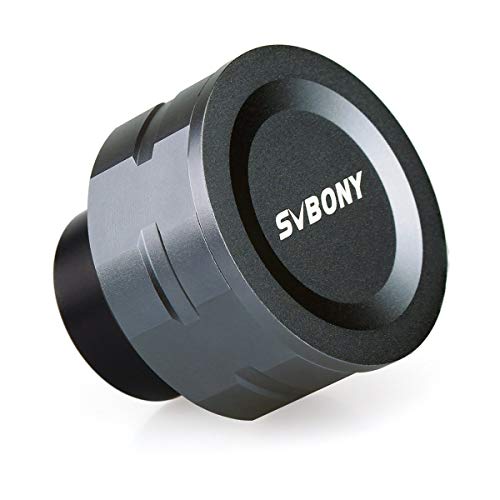
The SVBONY SV105 Astrophotography Camera is designed to simplify celestial imaging for beginners. It is a compact 1.25″ electronic telescope eyepiece camera with an IMX307 CMOS sensor that offers color imaging capabilities.
This camera excels in capturing lunar and planetary images and supports real-time observation by connecting directly to a laptop or PC. Its plug-and-play design requires no driver installation, compatible with Windows, Linux, and Android systems through specialized capture software options.
Ideal for quick captures of bright objects like the moon and bright planets, the SV105 enables easy sharing of views and videos. Its setup encourages newbie astrophotographers to get started without complex equipment.
SVBONY SV305C Color Astrophotography Camera

The SVBONY SV305C is an entry-level color CCD camera featuring the IMX662 back-illuminated sensor, which offers better light sensitivity and low readout noise for clearer planetary and lunar imaging.
This 2.1MP camera is well-suited for electronic-assisted astronomy (EAA) and uses a 1.25″ eyepiece interface, making it compatible with many telescopes. Its improved red spectral band sensitivity enhances deep-sky object imaging under various conditions without significant overexposure.
The removable UV/IR cut glass improves image clarity and reduces color distortion. The SV305C balances performance and affordability for amateur astrophotographers seeking enhanced image details.
SVBONY UV IR Cut Block Filter For CCD Cameras

The SVBONY UV IR Cut Filter is designed to improve astrophotography by filtering out undesirable ultraviolet and infrared light that digital sensors often pick up, which can reduce image clarity and contrast.
Constructed with high-quality optical glass and advanced multi-coatings, this filter minimizes reflections, chromatic aberration, and helps deliver sharper, more natural colors with fine gradations.
It also acts as a protective lens cover for DSLR cameras, CCD cameras, modified webcams, and telescopes with 2-inch thread compatibility. This filter is essential for maximizing image detail and contrast in astrophotography setups.
Alstar 1.25 inch Astrophotography Flip Mirror Adapter

The Alstar Flip Mirror adapter offers an effective solution for precise focusing and framing in astrophotography. This device enables simultaneous viewing through an eyepiece and capturing with a CCD camera.
The key feature is the ability to precisely center objects in the camera’s sensor chip by visually confirming their alignment through the eyepiece. This removes guesswork and improves targeting accuracy for astrophotography shots.
A helical focuser lets users easily adjust focus to ensure the eyepiece and camera view are parfocal, enabling sharper images. This adapter is compatible with refractor telescopes and is ideal for astrophotographers seeking exact framing control.
Astromania Deluxe Telescope LRGB Filter Set

The Astromania Deluxe LRGB Filter Set is designed for use with monochrome CCD cameras to create high-resolution color astrophotos by combining luminance and RGB filters. It includes 2-inch Luminance, Red, Green, and Blue filters.
These dichroic glass filters deliver excellent transmission with IR blocking coating to improve contrast and color accuracy. They are parfocal, eliminating the need to refocus between filter changes during imaging sessions.
This filter set enhances detail and reduces unwanted ultraviolet and infrared light, providing superior contrast and vivid astrophotographic results for serious hobbyists and advanced amateurs.
Buying Guide For CCD Cameras And Filters For Astrophotography
When selecting a CCD camera or accessory for astrophotography, consider the following factors to maximize your results:
- Sensor Type and Sensitivity: Back-illuminated CMOS sensors like the IMX662 offer improved light gathering efficiency and low noise, which is crucial for faint deep-sky objects.
- Resolution and Pixel Size: Larger pixel sizes collect more light for brighter images but may reduce resolution. Balance these according to your target objects.
- Compatibility: Ensure the camera or filter fits your telescope’s eyepiece size and thread standards, commonly 1.25″ or 2″.
- Filters: UV/IR cut and narrowband filters reduce light pollution and unwanted wavelengths, improving color accuracy and contrast especially under city skies.
- Ease of Use: Plug-and-play cameras with multi-platform software support reduce setup complexity. Accessories like flip mirrors help achieve precise focus and alignment.
- Cooling Features: Some advanced CCD cameras offer cooling to reduce sensor noise during long exposures, beneficial for deep-sky astrophotography.
- Image Capture Software: Compatibility with reliable capture programs such as Sharpcap, AstroDMx, or vendor-specific software enhances control over image acquisition and processing.
- Budget and Skill Level: For beginners, simpler, affordable models and bundles make a good start; advanced astrophotographers may prefer specialized sensors and multi-filter setups.
By factoring in sensor technology, optical compatibility, filtering options, and ease of operation, you can select equipment that matches your astrophotography goals and conditions for stunning night sky images.