Best Camera External Flash for Professionals and Enthusiasts
Discover top external flashes that unlock versatile lighting for any photography scenario. This guide highlights widely compatible units designed to boost exposure, color accuracy, and creative control across Sony, Canon, Nikon, Fujifilm, Olympus, and other DSLR or mirrorless bodies. Each option balances power, portability, and reliability for studio shoots, travel photography, and on-the-go content creation. Read on to compare features, performance, and practical considerations for choosing the best flash to expand your lighting toolkit.
| Product | Brand | Key Features |
|---|---|---|
| NEEWER TT560 | NEEWER | 260-vertex rotation, wide camera compatibility, manual power control |
| PHOTOOLEX FK310 | PHOTOOLEX | GN33, manual/M/S1/S2 modes, multi-flash, 5500K |
| Canon Speedlite EL-10 | Canon | Mid-range portable, compatible with EOS R series |
| NEEWER Z160 | NEEWER | 22Ws, GN14, compact, A/M modes |
| Powerextra DF-400 | Powerextra | GN33, 8 power levels, PC port |
NEEWER TT560 Flash Speedlite for DSLR Cameras
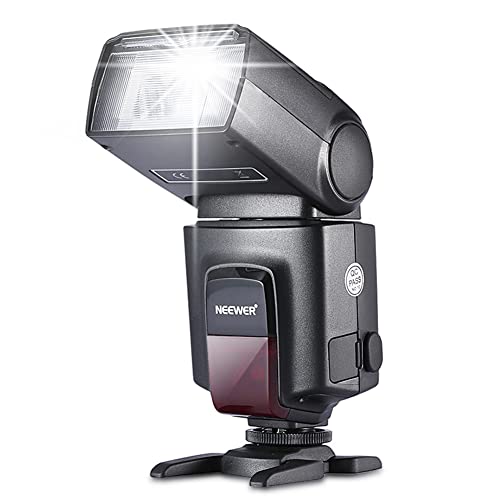
The NEEWER TT560 is a budget-friendly, manual speedlite designed for broad compatibility with Canon, Nikon, Panasonic, Olympus, Pentax, and other MI hot-shoe cameras. It supports vertical rotation from 0 to 90 degrees and horizontal rotation up to 270 degrees, enabling bounce lighting and creative angles. Notable is its lack of TTL or camera menu control, which makes it essential to understand your camera’s hot shoe communication. The unit emphasizes reliability for those who prefer manual control and straightforward fill light. Charge behavior and readiness are indicated by a simple charging indicator. It’s well-suited for beginners building a lighting setup or photographers seeking dependable, adaptable flash units.
PHOTOOLEX FK310 LCD Camera Flash

The FK310 from PHOTOOLEX delivers a robust GN33 output with a steady 5500K color temperature. It offers three flash modes—Manual, S1, and S2—and supports multi-flash functionality for complex light setups. While TTL is not supported, the device provides adjustable output power from 1/128 to 1/8 and up to 1/4 in extended ranges, with intuitive left/right button controls. It’s ideal for photographers who want a capable, affordable external flash with reliable color rendering and flexible triggering options without relying on camera-specific menus.
Canon Speedlite EL-10

The Canon EL-10 is a mid-range portable flash designed to complement select EOS R series mirrorless cameras. It emphasizes ease of use and compatibility with Canon’s ecosystem, supporting multiple channels of creative control for flash photography. This unit is positioned as a reliable upgrade from basic compact flashes, offering improved exposure, color temperature consistency, and power management aimed at enthusiasts and professionals seeking dependable, travel-friendly lighting without complicated operation steps.
NEEWER Z160 Single-Contact Mini Flash

The Z160 is a compact 22Ws flash with GN14 output and a 6000K color temperature. It’s designed for quick setups and street photography, featuring A/M modes and a small footprint suitable for travel. The unit includes a fixed 28mm lens focal range feel and a modest recycling time. It’s a practical choice for creators who want a lightweight, palm-sized flash that remains capable of delivering consistent light in everyday shoots while maintaining compatibility with various brands that support single-contact hot shoes.
Powerextra DF-400 Speedlite

The DF-400 from Powerextra offers a GN33 guide number at ISO 100, with 8 power steps for flexible exposure control. It supports manual, S1 and S2 wireless modes and uses a single-contact hot shoe for broad compatibility, including Canon, Nikon, Panasonic, Olympus, Pentax, Fujifilm, and Sony. Notable is its emphasis on wireless triggering via PC port compatibility, which is a practical feature for studio setups or remote triggering. It’s a versatile option for photographers who want a capable, affordable flash with multiple triggering options and careful power management.
Buying Guide
Key considerations help match the right flash to your shooting needs:
- Power and Guide Number: A higher GN enables better exposure at longer distances or with larger modifiers. Consider your typical subject distance and whether you shoot indoors or outdoors.
- Modes and Control: Manual only vs. TTL. TTL offers automatic exposure with compatible bodies, while manual modes provide consistent output ideal for adverse lighting or studio setups.
- Compatibility: Ensure hot-shoe type and camera brand compatibility. Some flashes work across multiple brands but may lack full function with certain models.
- Recycle Time: Quick recycling supports fast-paced shoots. Battery type (built-in vs. AA or proprietary) affects portability and readiness.
- Wireless Versatility: S1/S2 modes and PC ports enable off-camera triggering and complex lighting configurations for creative control.
- Size and Weight: Travel-friendly flashes save space but may sacrifice power; consider your primary use case—portraits, events, or macro work.
- Durability and Support: Look for robust build quality, reliable hot shoes, and manufacturer updates or accessories that extend functionality.
In choosing, balance power, portability, price, and ecosystem compatibility. If you require seamless integration with a specific camera line, prioritize TTL-enabled models from the same brand. For mixed gear setups or on-the-go shooting, compact manual units with solid build quality and flexible triggers offer dependable performance without overwhelming complexity.