Best Cameras for Black and White Photography: Timeless Tools for Grainy, Dramatic Shots
Black and white photography emphasizes texture, contrast, and mood. Whether you’re exploring classic film aesthetics or testing modern digital workflows, a dedicated camera setup can help you capture striking monochrome images. This guide highlights five accessible options geared toward beginners and enthusiasts, including disposable film cameras and entry-level digital models, all suitable for learning lighting, exposure, and tonal balance.
| Product | Brand | Type |
|---|---|---|
| Ilford XP2 Super Single Use Camera with Flash (27 Exposures) | Pinnacle Systems | Disposable 35mm Film |
| Kodak Tri-X 400 Single-Use Flash Camera (27 Exposures) | The Imaging World | Disposable 35mm Film |
| Macolink Gray Card 18% 3.35″ x 2.2″ | Macolink | Color Calibration Accessory |
| W & O Digital Camera For Teens | W & O | Digital Point-and-Shoot |
| 1 Shot Point and Shoot 35mm Film Camera (Mocha) | 1 Shot | Reusable 35mm Film |
Ilford XP2 Super Single Use Camera with Flash

XP2 Super 400 ISO film is pre-loaded for a straightforward monochrome experience. The camera includes a built-in flash and is designed for focusing from approximately 1 meter to infinity, offering flexibility in various lighting conditions. This disposable option is ideal for street photography, portraits, and scenes where quick, decisive framing matters.
Kodak Tri-X 400 Single-Use Flash Camera
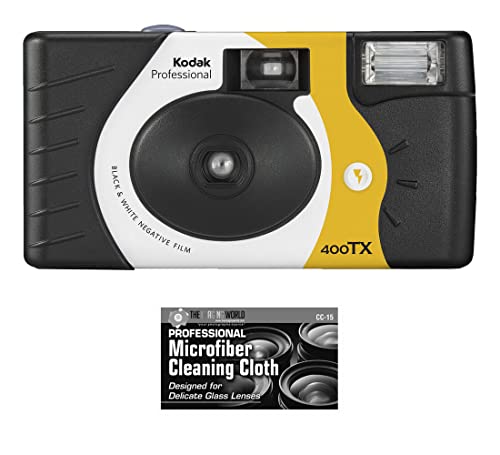
The Tri-X 400 film in a single-use body provides classic black-and-white tonality with substantial latitude. This 27-exposure disposable camera is ready for quick shoots, documentary sessions, or casual urban explorations where a gritty, timeless look is desired.
Macolink 18% Gray Card

Neutral gray cards help achieve accurate white balance and exposure, which is crucial when shooting black and white film or calibrating digital captures for monochrome conversions. The card’s durable, matte finish minimizes reflections, enhancing consistency across lighting scenarios.
W & O Digital Camera For Teens

This digital camera offers a modern entry point for aspiring photographers, with a 180° flip screen, built-in fill light, and beauty mode. While it delivers color, its simple controls and AI autofocus can help beginners explore composition and lighting that translate well to black-and-white post-processing or grayscale-focused shoots.
1 Shot Point and Shoot 35mm Film Camera (Mocha)

A compact, reusable half-frame 35mm camera bundled with a Black & White film roll. Its lightweight design is ideal for travel and candid portraits, offering a distinct, grainy aesthetic reminiscent of classic photojournalism and mid-century street photography.
Buying Guide: Key Purchase Considerations
- Film vs. digital: Decide whether you want the traditional experience of shooting on film (disposable or reusable 35mm) or the immediacy and flexibility of a digital camera. Film offers a timeless grain and dynamic range, while digital can be more forgiving for beginners and allows instant review.
- Film selection: For authentic black-and-white tonality, Tri-X and XP2 are popular choices. XP2 is a Chromogenic black-and-white film that can be processed alongside standard C-41 color films, while Tri-X is known for classic contrast and broad tonal range.
- Exposure control: Disposable and entry-level film cameras typically have limited controls. Learning how to meter light, choose ISO, and anticipate contrast will improve your monochrome results over time.
- White balance and calibration: Using a gray card helps refine exposure and white balance when shooting color and grayscale conversions later on. While grayscale images don’t require WB in the same way color does, consistent exposure matters for grayscale fidelity.
- Lens and framing: For black-and-white photography, composition, texture, and light are more critical than color. Consider subject distance, perspective, and natural or studio lighting to shape mood and contrast.
- Post-processing considerations: If using digital cameras or scanning film, plan how you’ll convert to grayscale, adjust contrast, and manage noise or grain to achieve the desired monochrome aesthetic.
- Budget and longevity: Disposable film cameras offer affordability and simplicity, while higher-quality film or digital cameras provide flexibility for ongoing projects. Consider your long-term goals and storage needs for photographs.
In monochrome photography, the interplay between light, texture, and shape defines the image. The listed devices provide approachable paths to practice these fundamentals, from classic film workflows to contemporary digital capture. Each option supports learning how tonal range affects mood, depth, and storytelling in black and white imagery.