Best 70-200 Mm Lens for Professionals and Enthusiasts
The 70-200mm f/2.8 class remains a top choice for portraiture, sports, and wildlife, offering bright apertures, reliable autofocus, and versatile focal ranges. This guide highlights five leading options across Canon, Sony, Nikon, and Sigma to help you compare performance, handling, and image quality. Each entry links to its Amazon listing for quick reference and features a concise overview aligned with current camera systems.
| Brand | Model | Mount / System | Max Aperture | Notable Feature |
|---|---|---|---|---|
| Canon | RF70-200mm F2.8 L IS USM | Canon RF (Mirrorless) | f/2.8 | Lightweight for its class, IS up to 5 stops |
| Sony | FE 70-200mm F2.8 GM OSS II | Sony E (Full-Frame) | F2.8 | Advanced optics, fast AF, high-contrast rendering |
| Canon | EF 70-200mm f/2.8L IS III USM | Canon EF (DSLR) | F2.8 | Air Sphere Coating, solid IS up to 3.5 stops |
| Sony | FE 70-200mm f/2.8 GM OSS | Sony E (Full-Frame) | F2.8 | G Master sharpness, superb bokeh, excellent AF |
| Nikon | NIKKOR Z 70-200mm f/2.8 S | Nikon Z (Mirrorless) | F2.8 | Professional build, versatile control options |
The following sections review five standout models in detail, covering image quality, autofocus, handling, and compatibility. Each entry cites key features to help you decide which lens fits your gear and shooting style.
Canon RF70-200mm F2.8 L IS USM Lens Review

The Canon RF70-200mm F2.8 L IS USM is a high-performance telephoto zoom designed for Canon’s RF mirrorless system. It delivers a bright f/2.8 aperture through the entire zoom range, producing clean background separation and strong subject isolation. The lens is noted for its compact, relatively lightweight build for a professional telephoto, aiding long shoots. Optical image stabilization provides up to five stops of shake correction, helping keep sharp handheld images in challenging light or during dynamic action scenarios.
Sony FE 70-200mm F2.8 GM OSS II
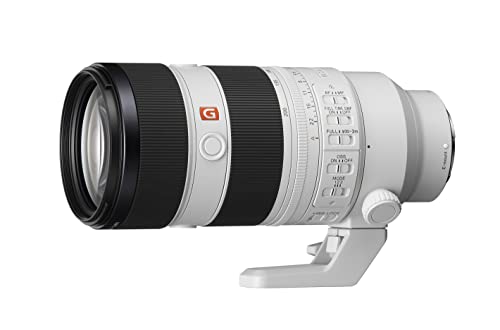
The Sony FE 70-200mm F2.8 GM OSS II is designed for Sony’s full-frame mirrorless lineup, delivering exceptional resolution across the zoom range. It features multiple aspherical and low-dispersion elements to minimize chromatic aberration, with a Nano AR coating to reduce flare. The lens uses XD Linear Motors for fast, quiet AF and supports optional teleconverters for extended reach. Its focus performance supports smooth video work with reduced focus breathing and strong tracking in motion projects.
Sigma 70-200mm f/2.8 DG DN OS Sports Lens for Sony E Mount

The Sigma 70-200mm f/2.8 DG DN OS Sports lens offers strong performance for Sony E-mount users, with an OS system to stabilize handheld shots. It is designed for full-frame mirrorless cameras and emphasizes coatings and optical elements that minimize flare while maintaining high sharpness. Its construction supports durability in demanding shoots, and the lens is compatible with a wide range of Sony bodies, giving photographers a flexible tool for portraits, events, and sports.
Canon EF 70-200mm f/2.8L IS III USM

The Canon EF 70-200mm f/2.8L IS III USM is a staple for Canon DSLR users, offering a constant f/2.8 aperture across the zoom range and a proven optical performance. Canon’s Air Sphere Coating reduces ghosting and flare, while Optical Image Stabilization provides up to 3.5 stops of shake correction. This lens remains a strong choice for professionals who rely on Canon’s DSLR ecosystem and need dependable performance in sports, weddings, or portrait work.
Sony FE 70-200mm f/2.8 GM OSS

The Sony FE 70-200mm f/2.8 GM OSS is a flagship lens in Sony’s lineup, delivering exceptional sharpness and creamy bokeh. Its G Master design emphasizes image quality with a robust build and weather sealing. The lens features a dual floating focus system to maintain AF speed and accuracy across focus distances, minimizing focus breathing for video and maximizing stability during motion capture. It is compatible with Sony’s extensive teleconverter ecosystem for added reach.
Buying Guide
Key purchase considerations to help you compare options across brands and mounts:
- Camera system compatibility: Ensure the lens mount matches your camera (Canon RF, Canon EF, Sony E, Nikon Z, etc.).
- Maximum aperture: A constant f/2.8 provides consistent exposure and depth of field control across the zoom range, important for low-light and subject isolation.
- Autofocus performance: Look for lens elements that minimize focus hunting and support fast, reliable tracking for moving subjects.
- Optical stabilization: Some lenses offer up to 5 stops of shake correction, which is beneficial for handheld shooting and video.
- Build quality and weather sealing: Professional telephotos should withstand field use and varying weather conditions.
- Weight and balance: Heavier lenses require sturdy support; consider tripod usage or shoulder rigs for extended shoots.
- Accessory compatibility: Teleconverters extend reach but may affect autofocus speed; verify compatibility with your body.
- Image quality goals: Evaluate sharpness, contrast, color rendition, and bokeh across focal lengths to match your style.
- Price versus performance: Compare total package value including lens performance, handling, and durability.
In summary, the best 70-200mm f/2.8 lenses cover a range of ecosystems—from Canon and Nikon DSLR to Sony’s mirrorless lineup. Prospective buyers should weigh system compatibility, autofocus behavior, stabilization, weight, and field reliability when choosing a model that fits their shooting disciplines, whether professional sports, portraiture, or event coverage.