Best 16 Mm F2.8 Fisheye Lenses for Creative Wide-Angle Photography
Exploring ultra-wide perspectives begins with a compact, fast-focusing fisheye lens. This guide highlights five popular 16mm f/2.8 fisheye options from top brands, ideal for dramatic landscapes, architecture, and immersive video. Each model offers a distinct balance of image quality, autofocus performance, and build suitable for both full-frame and APS-C systems. Compare features, compatibility, and practical use cases to choose the right fisheye for your camera ecosystem.
| Product | Brand | Mount/Notes |
|---|---|---|
| Canon RF 16mm f/2.8 STM Lens | Canon | RF mount, fixed focal length, fast STM AF |
| Sony SAL-16F28 16mm f/2.8 Fisheye | Sony | Alpha DSLR, sturdy build, corner-to-corner sharpness |
| Nikon 1910 AF FX Fisheye-NIKKOR 16mm f/2.8D | Nikon | Full-frame fisheye, 180° diagonal, fixed lens |
| Nikon AF FX Fisheye-NIKKOR 16mm f/2.8D (Renewed) | Nikon | Renewed option, same 180° diagonal view |
| Rokinon Prima 16mm f/2.8 Wide Angle | Rokinon | Compact, autofocus, versatile for architecture & landscape |
Canon RF 16mm F2.8 STM Lens

Canon’s first ultra-wide fixed focal length RF lens delivers bright image quality with a constant f/2.8 aperture. The STM stepping motor provides smooth and quiet continuous autofocus during video recording, making it well-suited for hybrid photo-video workflows. Its compact design suits mirrorless bodies while preserving wide field coverage that emphasizes dramatic perspective for landscapes, architecture, and interior shots. The lens emphasizes sharp corners and consistent performance across its field, helping creators achieve bold, expansive visuals with minimal distortion.
Sony SAL-16F28 16mm F2.8 Fisheye

This fisheye lens provides a 16mm (35mm equivalent) field of view with a bright f/2.8 aperture and delivers corner-to-corner sharpness. It is designed to render a unique hemispherical perspective, suitable for experimental portraits, architectural shots, and immersive landscapes. The lens focuses crisply from about eight inches to infinity, enabling dynamic close-quarters shots with pronounced curvature and dramatic distortion that characterizes classic fisheye imagery.
Nikon 1910 AF FX Fisheye-NIKKOR 16mm f/2.8D

Nikon’s 16mm f/2.8D fixed fisheye lens delivers full-frame fisheye imagery with an expansive 180° diagonal angle. While non-zoomable, it excels in producing extreme perspective distortions ideal for creative landscapes, architecture, and immersive 360-degree imagery. The minimum focusing distance is about 0.85 feet, allowing for close-up foregrounds that exaggerate spatial relationships while maintaining broad coverage and excellent image quality across the frame.
Nikon AF FX Fisheye-NIKKOR 16mm f/2.8D (Renewed)

This renewed Nikon 16mm f/2.8D provides the same full-frame fisheye performance with a 180° diagonal field of view. It’s a cost-conscious option for photographers seeking classic circular and hemispherical distortion effects. The lens maintains a fixed focal length and minimal distortion at the edges, offering strong performance for stylized landscapes, interior photography, and creative framing across Nikon DSLR bodies.
Rokinon Prima 16mm F2.8 Wide Angle
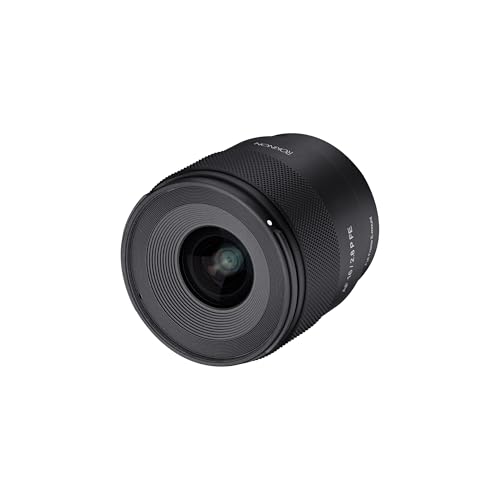
The Rokinon Prima 16mm F2.8 is a compact wide-angle lens offering full-frame coverage with a lightweight profile. It features smooth autofocus for both photos and video, making it adaptable for hybrid shooters who require quick compositional versatility. A 12 cm minimum focus distance enables semi-macro style details in macro-oriented scenes, while the expansive field of view supports dramatic landscapes and architectural photography with a strong foreground-to-background relationship.
Buying Guide
Key purchase considerations for 16mm f/2.8 fisheye lenses include optical quality, field of view, and distortion characteristics. For full-frame bodies, a true 180° diagonal angle can appear more dramatic, while APS-C ecosystems may require cameras with wider angle equivalence to achieve similar effects. Autofocus performance matters for video and dynamic events; lenses with smooth, quiet motors reduce noise in recording. Build quality, weather sealing, and weight influence field use, travel, and street photography. Mount compatibility and the availability of support accessories (hoods, caps, protective cases) should align with your camera brand. Finally, evaluate the aesthetic you desire: extreme curvature for abstract imagery or balanced distortion for architectural storytelling.
When choosing among these options, consider existing gear compatibility. Canon’s RF lens leverages the RF system’s autofocus accuracy and compact design, while Sony and Nikon options emphasize robust autofocus and native body integration. The Rokinon Prima offers a budget-friendly, versatile option with compact handling, suitable for travel and street shoots. For those seeking classic vintage-style perspective, the Nikon options provide a familiar full-frame fisheye look with proven image quality. Each lens can open new creative avenues, from sweeping panoramas to immersive interior shots, depending on your shooting style and preferred camera system.