Best Cameras for Planetary Imaging: Top Picks for 2026
Planetary imaging requires compact, sensitive cameras that can capture sharp detail at high frame rates. The following picks are optimized for lunar and planetary photography, offering varying sensors, cooling options, and compatibility with common astronomy software. Each entry includes key features to help you compare performance, ease of use, and integration with standard telescopes and software stacks.
| Product | Brand | Sensor / Type | Main Strength |
|---|---|---|---|
| SVBONY SV105 Telescope Camera | SVBONY | IMX307 color CMOS | Beginner-friendly, easy capture |
| SVBONY SV305C Astrophotography Camera | SVBONY | IMX662 color sensor | Low noise, good for EAA |
| SVBONY SC432M Monochrome Cooled | SVBONY | IMX432 monochrome | High sensitivity, fast frame rates |
| ZWO ASI183MC Pro | ZWO | CMOS color, 20.1 MP | High resolution, cooled sensor |
| OGMA GP678M Guide/Planetary Mono | OGMA | IMX678 monochrome | Excellent for guiding and lunar/planetary |
Note: All product links point to the respective Amazon listings. For detailed specs and compatibility, refer to the product pages directly.
SVBONY SV105: Entry-Level Planetary Imaging
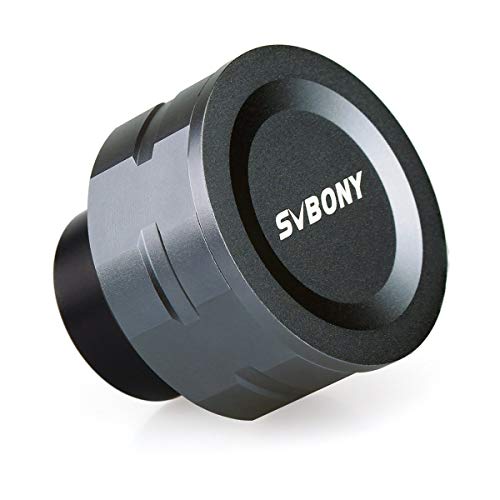
The SV105 is positioned as a beginner-friendly camera for planetary imaging. It uses the IMX307 color CMOS sensor and supports quick video capture for real-time observations. Plug-and-play operation minimizes setup time, with compatibility notes noting driver-free use on Windows systems and software options like Sharpcap Capture. Lunar and planetary targets respond well to the exposure control and bright-image output, making it a popular starter choice for those new to astrophotography while still offering practical usefulness for quick lunar or planet videos.
SVBONY SV305C: Mid-Range Planetary Imaging

The SV305C offers a step up with the IMX662 sensor and a back-illuminated design for improved sensitivity and lower readout noise. It’s suitable for both planetary and lunar imaging, and it supports extended use for EAA (electronic first-light) sessions. The camera’s enhanced red spectral response helps minimize glow and improve detail in brighter targets, making it a versatile choice for observers who want better signal-to-noise without stepping into full cooling solutions.
SVBONY SV205: Beginner to Intermediate Imaging

The SV205 brings a higher 7.05 MP sensor count for broader applications beyond planetary imaging, including astrophotography of brighter deep-sky targets. Designed to work with 1.25″ eyepieces, this model emphasizes user accessibility and compatibility with MacOS systems via AstroAMX Capture. It ships with standard accessories such as a USB 3.0 cable and dust cover, and it remains a practical option for those who want a camera capable of both planetary and general astro-imaging workflows.
SVBONY SC432M: Monochrome Global Shutter

The SC432M is a monochrome cooled planetary camera featuring a global shutter and a 1.1″ form factor. With a 9 μm pixel pitch and high sensitivity, it provides sharp planetary details with reduced rolling shutter effects. Its ability to capture high frame-rate sequences makes it well-suited for stacking and producing crisp moon and planet images, especially when paired with favorable seeing conditions and a stable telescope setup.
ZWO ASI183MC Pro: High-Resolution Color Imaging

The ASI183MC Pro is a high-resolution color camera widely used for both planetary and deep-sky work. Its cooled sensor and advanced CMOS design enable higher dynamic range and lower noise across longer exposure times. With 20.1 megapixels and fast USB 3.0 transfer, this camera supports detailed lunar and planetary captures and can serve as a robust platform for more serious imaging setups on motorized mounts, expanding to broader astro-imaging ambitions beyond planets.
OGMA GP678M Guide/Planetary Mono

The GP678M focuses on monochrome planetary imaging with the IMX678 sensor, offering strong performance for planetary detail capture and lunar imaging. It is particularly effective for auto-guiding applications, helping improve tracking accuracy during longer sessions. This camera suits users who want a dedicated planetary imaging solution with reliable performance and compatibility for guided observations on a stable mount.
Buying Guide: Key Purchase Considerations
- Sensor type and resolution: Color sensors (e.g., IMX307, IMX662, IMX183) provide convenient color output, while monochrome sensors (e.g., IMX432, IMX678) excel in sensitivity and detail when paired with filters. Decide whether you prioritize color convenience or maximal signal-to-noise in monochrome imaging.
- Cooling and noise: Cooled cameras like some SVBONY and ZWO models reduce sensor noise, enabling longer exposures and cleaner planetary frames. For beginners, non-cooled options with good readout performance can be sufficient, especially when used with bright targets like the Moon.
- Frame rate and shuttling: Global shutters and high frame rates help capture sharp planetary sequences with less motion blur. If you plan to stack video frames, higher frame rates improve the chances of obtaining clean data under variable seeing.
- Software compatibility: Ensure the camera supports commonly used astronomy software (Sharpcap, AstroDMx Capture, AstroAIM, etc.) and your operating system (Windows, macOS, Linux). Some models require specific capture software for optimal results.
- Connectivity and form factor: A 1.25″ eyepiece-compatible interface is standard and easy to integrate with many telescopes. Consider the physical size and thermal management needs for your observing setup.
- Guiding support: If long sessions are planned, monochrome cameras with good sensitivity can be paired with auto-guiders to improve tracking accuracy and image quality over time.
- Budget and upgrade path: Entry-level cameras are ideal for beginners, while mid-range and higher-end options offer more megapixels, better low-light performance, and advanced features. Think about future expansion (filters, mounts, and software) when choosing.
These considerations help balance ease of use, image quality, and long-term value. When selecting a camera for planetary imaging, align the choice with your telescope, observing habits, and software ecosystem to achieve the best results.